
Digital Transformation in the Banking Industry: What Went Wrong?
Digital transformation has been heralded as a game-changer for the banking industry, promising increased efficiency, improved customer experiences, and a competitive edge in a rapidly evolving market. However, despite significant investments, many banks have struggled to achieve the anticipated results. This blog delves into the challenges that have hindered the banking industry's digital transformation efforts, analyzing key data and offering insights into what went wrong.
The Promise of Digital Transformation in Banking
Digital transformation offered the banking sector the potential to innovate, reduce costs, and enhance customer satisfaction by adopting new technologies such as AI, blockchain, and big data. Banks were early adopters of digital technologies, with many investing heavily in digital platforms, online services, and mobile apps, aiming to revolutionize the customer experience.
Key Challenges Faced by the Banking Industry
Despite the initial optimism, banks encountered several challenges during their digital transformation journeys:
- Legacy Systems: Integrating cutting-edge technologies with outdated legacy systems proved difficult, leading to inefficiencies and increased costs.
- Regulatory Hurdles: The heavily regulated nature of the banking industry slowed the adoption of digital technologies, making rapid innovation challenging.
- Cultural Resistance: Internal resistance to change from employees and management who were accustomed to traditional banking practices hindered the adoption of new technologies.
- Customer Trust Issues: Maintaining customer trust in a digital environment, particularly concerning data privacy and security, was another significant challenge.
Data Analysis - Declining Interest in Digital Transformation Keywords
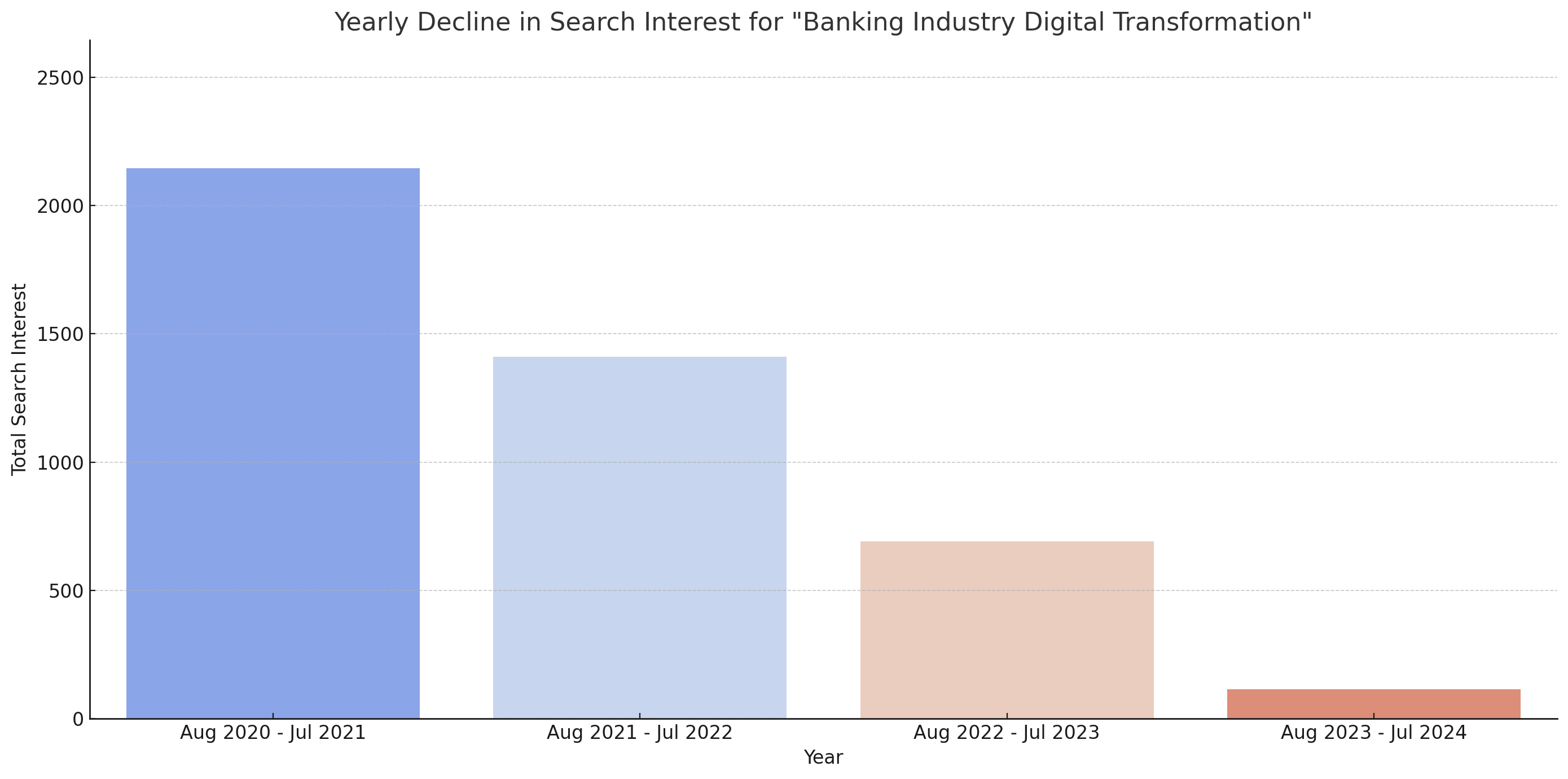
Recent data reveals a significant decline in search interest for terms like "banking industry digital transformation" over recent months. This decline suggests waning enthusiasm for digital transformation in banking, possibly due to the challenges and failures experienced by many institutions.
Case Studies of Failed Digital Transformation Efforts
Several high-profile failures have underscored the challenges of digital transformation in banking:
- Case Study 1: A major bank's attempt to overhaul its digital banking platform ended in failure, resulting in significant financial losses and negative media coverage.
- Case Study 2: Another bank's struggle to comply with regulatory requirements during its digital transformation led to costly delays and a watered-down version of its original vision.
Successful Examples and Lessons Learned
Despite these challenges, some banks have successfully navigated the pitfalls of digital transformation:
- BBVA: The Spanish multinational bank invested in technology and created a customer-centric digital platform that has been widely praised.
- JPMorgan Chase: JPMorgan Chase's "Digital Everything" strategy leveraged data analytics and AI to enhance customer experiences and streamline operations.
Moving Forward - Strategies for Success
Looking ahead, banks can learn from past failures and successes to improve their digital transformation efforts:
- Adopting a Phased Approach: Starting with small, manageable projects that can be scaled up as success is demonstrated.
- Building a Digital Culture: Encouraging innovation and adaptability among employees.
- Balancing Innovation with Regulation: Navigating the regulatory landscape effectively while driving innovation.
- Enhancing Customer Trust: Maintaining transparency and robust data security measures.
Conclusion
The banking industry's digital transformation efforts have faced significant challenges, leading to declining interest and, in some cases, outright failure. However, by analyzing what went wrong and learning from successful examples, banks can better position themselves for future success. The key lies in adopting a phased approach, fostering a digital-first culture, balancing innovation with regulation, and maintaining customer trust through robust security measures.
As the digital landscape continues to evolve, banks that can effectively navigate these challenges will not only survive but thrive in the competitive marketplace. By leveraging the lessons learned from past experiences, the banking sector can unlock the full potential of digital transformation and deliver on its promises of efficiency, innovation, and enhanced customer experience.
Ready to navigate your digital transformation journey? Contact Quantum Strategies today to learn how we can help you achieve success in the digital age.