What to take away
- Research each channel using its own signals.
- Align the customer need, ad message and destination.
- Verify readiness and measure real enquiries before drawing performance conclusions.
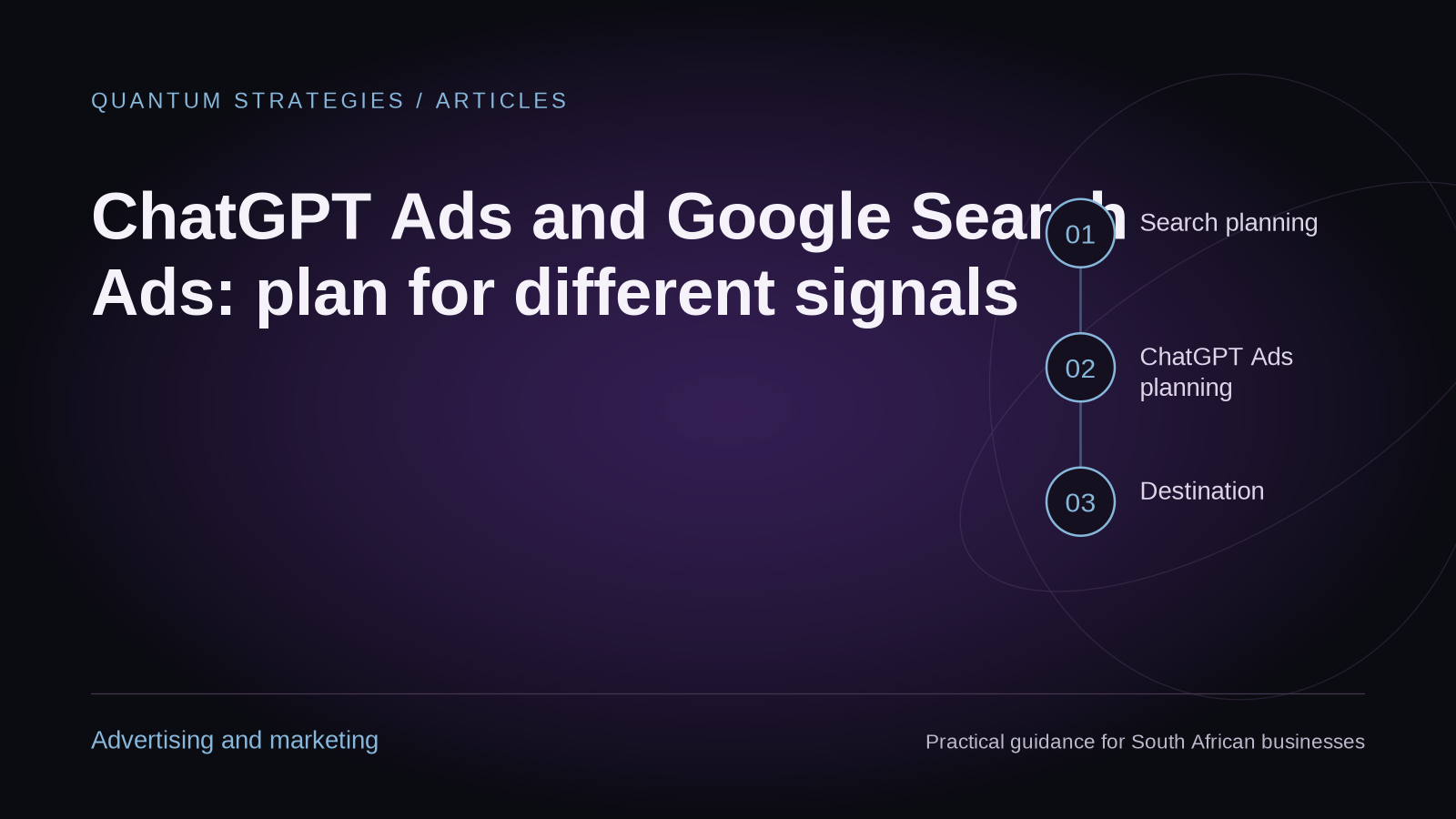
Search planning
Queries, keywords and intent
ChatGPT Ads planning
Offer facts and useful context
Destination
The same need and truthful promise
Measurement
Verified action and lead quality
Original planning comparison; neither input guarantees delivery, approval or commercial results.
Start with one customer need and one suitable offer
Choose an offering the business can deliver and explain clearly. A course enquiry, a software-selection consultation and a sales-training enquiry involve different decisions. Combining them under a vague promise of “business growth” makes it harder to write useful ads or assess the landing page.
Write a short planning brief: the customer problem, the verified scope, the intended next step and the evidence supporting the offer. Identify any unknown price, availability or delivery condition before drafting. An attractive message is not ready if the business cannot substantiate what it promises.
Understand what a Google Search keyword does
Google’s keyword-matching guidance describes broad, phrase and exact match as different ways to connect keywords with searches. Exact match is not simply a promise that only the identical typed words can trigger an ad; meaning and intent matter within Google’s documented matching rules.
Use keyword research to distinguish needs, terminology and intent, then review the actual search terms available from authorised campaign data. A search-volume estimate is not a count of unique buyers. It also does not tell you how many people discuss the same need in ChatGPT.
| Planning element | Google Search Ads | ChatGPT Ads |
|---|---|---|
| Useful research input | Search language and observed search intent | Verified offer details and relevant customer situations |
| Relevance input discussed here | Keywords and match settings | Natural-language context hints |
| What not to assume | Searches equal unique buyers | Hints are exact-match keywords |
| Shared requirement | Truthful ad and useful destination | Truthful ad and useful destination |
Write context hints as factual relevance information
OpenAI describes context hints as factual information added at ad-group level to explain when an offer may be relevant. Write a natural phrase about a genuine feature or customer need. Hints are not targeting rules, geographic restrictions, exclusions or placement guarantees.
For an analytics course, a hint could explain why fictional reporting exercises help a beginner practise safely, if those exercises are actually included. Keep the detail accurate and consistent with the course overview.
Group ads around a coherent need. If the offer requires a different promise and destination, assess whether it belongs in a separate group.
Worked example: plan a course enquiry journey
Imagine a business offering an introductory analytics course. Its verified facts include self-paced lessons, fictional practice and an enquiry route for access. The ad should describe that learning opportunity and send visitors to the course overview, where they can understand the audience, content and arrangements.
A Search planning seed might concern learning GA4 for a small business. The separate ChatGPT Ads brief can explain the course’s fictional exercises and beginner audience. These examples describe planning material, not measured demand, eligibility or ad approval.
Test the exact landing page, not only the homepage
OpenAI’s crawler guidance requires OAI-AdsBot access to submitted ad destinations and recommends OAI-SearchBot access. The website team should check the full URL, tracking parameters, redirects and required assets. A page that works in a signed-in browser may still fail for a crawler or a mobile visitor.
Test the offer, navigation and enquiry action on the actual destination. Confirm that the page continues the ad’s message and explains any important limitations. Crawler access is one technical requirement; fixing it does not establish that the ad will pass review or deliver.
Keep platform readiness and business readiness separate
Before any launch, confirm current product availability, account access, category policy, permitted geography, billing and review requirements through the official product and authorised account workflow. Do not infer support for a particular business category from a country appearing in a list.
Also check delivery capacity and follow-up. Someone must own the enquiry inbox, understand the offer and be able to respond accurately. A technically valid campaign can still waste effort if the business cannot answer the requests it generates.
Design the measurement before setting a test budget
Define the intended action and verify how it is recorded. Keep impressions, clicks, accepted enquiries, qualified leads and sales separate. Use consistent campaign naming and non-personal tracking values, and document the reporting period and attribution settings.
Search research can help plan a Google test, but it cannot supply a ChatGPT conversation-volume forecast. Treat a new channel as a measured experiment with a clear spending boundary and review decision. Avoid claims that one platform will outperform another without comparable evidence from the actual business.
Use learning material as preparation
Quantum Strategies’ Getting Started with ChatGPT Ads Manager course introduces planning through fictional practice. Its public overview explains the learning scope and enquiry route. Marketing consulting can help scope the offer and landing-page journey before any authorised advertising activity.
Course participation does not establish account eligibility, ad approval or expected performance, and it does not imply endorsement by OpenAI or Google. Product rules change, so recheck official guidance when moving from a learning exercise to an actual launch.
Common questions
What should I prepare before asking for campaign help?
Bring the verified offer, intended customer need, destination URL, desired action, delivery constraints and available evidence. Identify missing facts explicitly so that a campaign brief does not turn assumptions into promises.
Does allowing OAI-AdsBot guarantee approval?
No. It supports technical access for destination validation. The account, ad, offer and destination still need to meet the current applicable requirements and review process.
Sources and further reading
Official and specialist sources checked on 28 October 2026. Examples and diagrams in this article are illustrative.
- Google Ads: About keyword matching optionsBroad, phrase and exact keyword matching, including meaning/intent distinctions.
- OpenAI: Writing context hints for ChatGPT AdsHints add factual relevance context, not targeting, exclusion, geography or delivery guarantees.
- OpenAI: Advertiser guidance for allowing web crawlersOAI-AdsBot requirement; full URL, redirect, asset and access checks; access does not guarantee approval.